The no-spend challenge: rules, what counts as essential, and a gentler way to do it
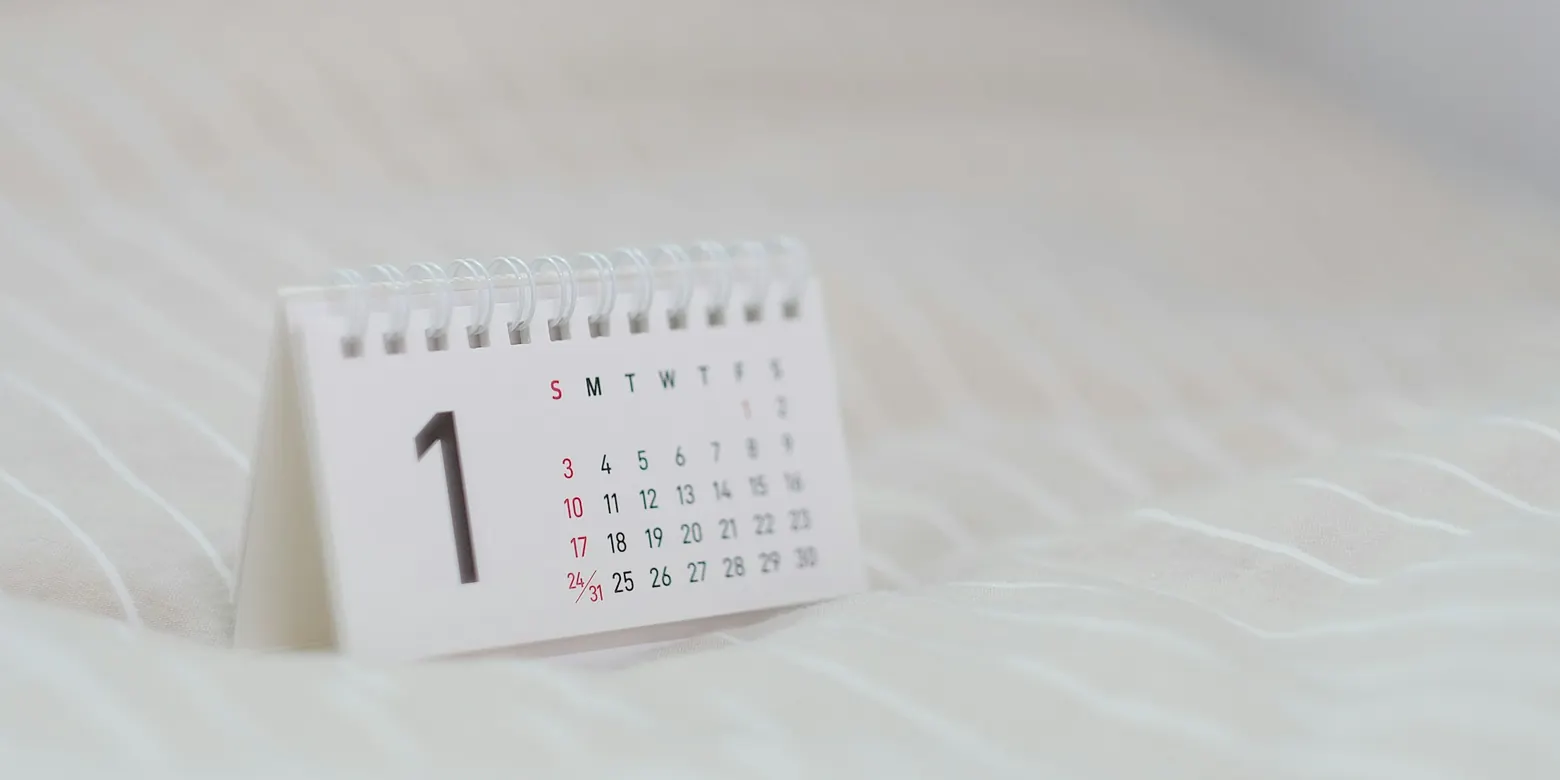
Short answer
A no-spend challenge is a set period, such as a weekend, a week or a month, when you buy nothing except essentials you listed in advance: bills, groceries from a list, transport and medicine. Write the rules down before you start, prepare so day two is not a struggle, log everything, and if you slip, log it and carry on. If the strict version is too much, mix no-spend days with low-spend days on a daily budget and let what you do not spend carry forward.
A no-spend challenge means choosing a stretch of time, usually a weekend, a week or a month, and buying nothing except the essentials you listed before you started. Bills still get paid and groceries still get bought from a list; takeout, shopping, entertainment and anything new wait until it is over. It works best when the rules are written down in advance, the kitchen is stocked, and a slip is logged and moved past rather than treated as failure. If a strict version sounds unrealistic, a gentler one uses a daily budget: some days at zero, some low-spend days, and the money you do not spend carries forward.
What is a no-spend challenge?
It is a short, deliberate pause on non-essential spending. The money saved in one week helps, but the more useful part is seeing which purchases happen on autopilot: the coffee on the way in, the delivery on a tired evening, the item in the basket because it was on sale. When those stop for a while, you find out which ones you miss and which you do not.
Give the money a job before you start: paying down a card, a small emergency fund, or recovering from an expensive month. A named goal makes the rules easier to keep.
Should you try a no-spend weekend, week or month?
| Length | Good for | Plan for |
|---|---|---|
| A weekend | A first try; breaking a weekend shopping or eating-out habit | Free plans with friends, food at home |
| A week | Seeing a full cycle of weekday habits: commute, lunches, evenings | One grocery shop before you start, packed lunches |
| A month | Resetting habits and freeing a noticeable amount for a goal | Bills, birthdays and events inside the month; a mid-month grocery shop |
If you have not done one before, start with a weekend or a week. A week you finish teaches more than a month you abandon on day nine.
What are the rules, and what counts as essential?
The rule itself is simple: during the challenge, you only pay for things on your essentials list. The work is making that list specific. "Food" is too broad; "groceries from this week's list" is clear.
| Spending | During the challenge |
|---|---|
| Rent, utilities, phone, insurance, loan payments | Pay as usual. Bills are not the target. |
| Groceries from a written list | Yes |
| Commute to work or school | Yes |
| Medicine and health care | Yes |
| Childcare, pet food and pet care | Yes |
| Takeout, delivery, eating out, coffee out | No |
| Clothes, gadgets, home items, online shopping | No: add them to a wait list |
| Entertainment, games, new subscriptions and upgrades | No |
| Gifts, a wedding, a trip already booked | Decide before you start, including the amount |
A few more rules:
- Write the rules down before day one. Deciding what counts while standing at the counter rarely goes well.
- Do not stock up the day before. A huge shop right before the challenge only moves the spending. Buy for the week, not the month.
- Decide about gift cards and points. Counting them as spending keeps the focus on the habit rather than the cash.
- Keep a wait list. Anything you want goes on a list with the date. If you still want it when the challenge ends, buy it then.
How do you prepare for a no-spend week?
- Pick the dates. Check your calendar for birthdays, trips and events. It does not have to start on a Monday.
- List essentials and exceptions. Use the table above. If a friend's birthday dinner falls on the Saturday, decide now whether it is in, and at what amount.
- Eat down the cupboard, then shop once. See what is already in the fridge and freezer, plan the week's meals around it, and buy the rest from one list.
- Remove easy triggers. Unsubscribe from shop emails, turn off promo notifications, and log out of shopping apps for the duration.
- Plan free things. A walk, the library, a film at home, cooking with friends. Empty evenings are where spending creeps back.
- Decide how you will track. A notebook, a phone note or an app. Log essentials too, so at the end you can see everything you spent.
What if you slip?
You will probably buy something off the list at some point: a coffee after a bad night, a snack on a long day. That is normal and does not cancel the challenge.
- Log it. What it was and what it cost. Hiding it is the only real way to fail.
- Note why. Tired, bored, social, forgot something? The reason is the useful part.
- Carry on tomorrow. Do not reset the count, and do not add days as a punishment.
- Fix the rule, not yourself. If the same thing keeps happening, it may be an essential you left off, or a trigger you can remove. Change the rule on purpose rather than breaking it every day.
- Do not let one slip become a spree. "I've already broken it" is how a $5 coffee turns into a $60 afternoon.
What is a gentler version of the challenge?
A strict no-spend month does not fit every life. Some weeks include work lunches, a friend's birthday or a school trip. The gentler version keeps the idea but swaps "spend nothing" for a daily budget:
- Set a daily budget for everyday spending after rent, bills and savings. The daily budget calculator works it out.
- Aim for a few no-spend days a week, not seven.
- Keep the other days low-spend: essentials, plus one planned treat if you want it.
- Let unspent money carry forward. A $0 day passes its whole amount to the days after it, so quiet weekdays pay for a planned Saturday.
- Cap the carry-over. About five days' worth keeps a buffer without turning a quiet week into one oversized spending day.
Example: a low-spend week on $30 a day
These are example numbers. The daily budget is $30, so the week is $30 × 7 = $210. "Available" is today's $30 plus whatever carried in from yesterday.
| Day | Plan | Available | Spent | Carries forward |
|---|---|---|---|---|
| Mon | No-spend | $30 | $0 | $30 |
| Tue | Essentials: groceries | $60 | $18 | $42 |
| Wed | No-spend | $72 | $0 | $72 |
| Thu | Slip: coffee and a pastry | $102 | $9 | $93 |
| Fri | No-spend | $123 | $0 | $123 |
| Sat | Planned: dinner with friends | $153 | $45 | $108 |
| Sun | No-spend | $138 | $0 | $138 |
Four of the seven days were at $0. Spending for the week was $72 ($18 + $9 + $45), leaving $138 of the $210 ($210 − $72). With a five-day cap of $150 ($30 × 5), the carry-over never reached the limit.
Thursday's slip cost $9 and changed nothing that mattered. Saturday's dinner fit easily because the quiet days had already paid for it. The real decision is what happens to the $138. Moving it to savings at the end of the week locks in the result. Leaving it as carry-over gives next week a buffer; just do not let a big "available" number on Monday turn into a spree.
What should you do when the challenge ends?
- Add it up. Total spent, compared with an ordinary week or month of the same length.
- Move the difference. Transfer what you did not spend to savings, or to the goal you named, on the same day.
- Read the wait list. Cross off what you no longer want. Buy what you still want, one item at a time.
- Keep one rule. Pick the change that felt easiest, such as packed lunches or delivery only on Fridays, and keep it.
Watch the first few days afterwards. A rebound, where the saved money goes on catch-up spending, undoes the point.
How can My Money help with a no-spend challenge?
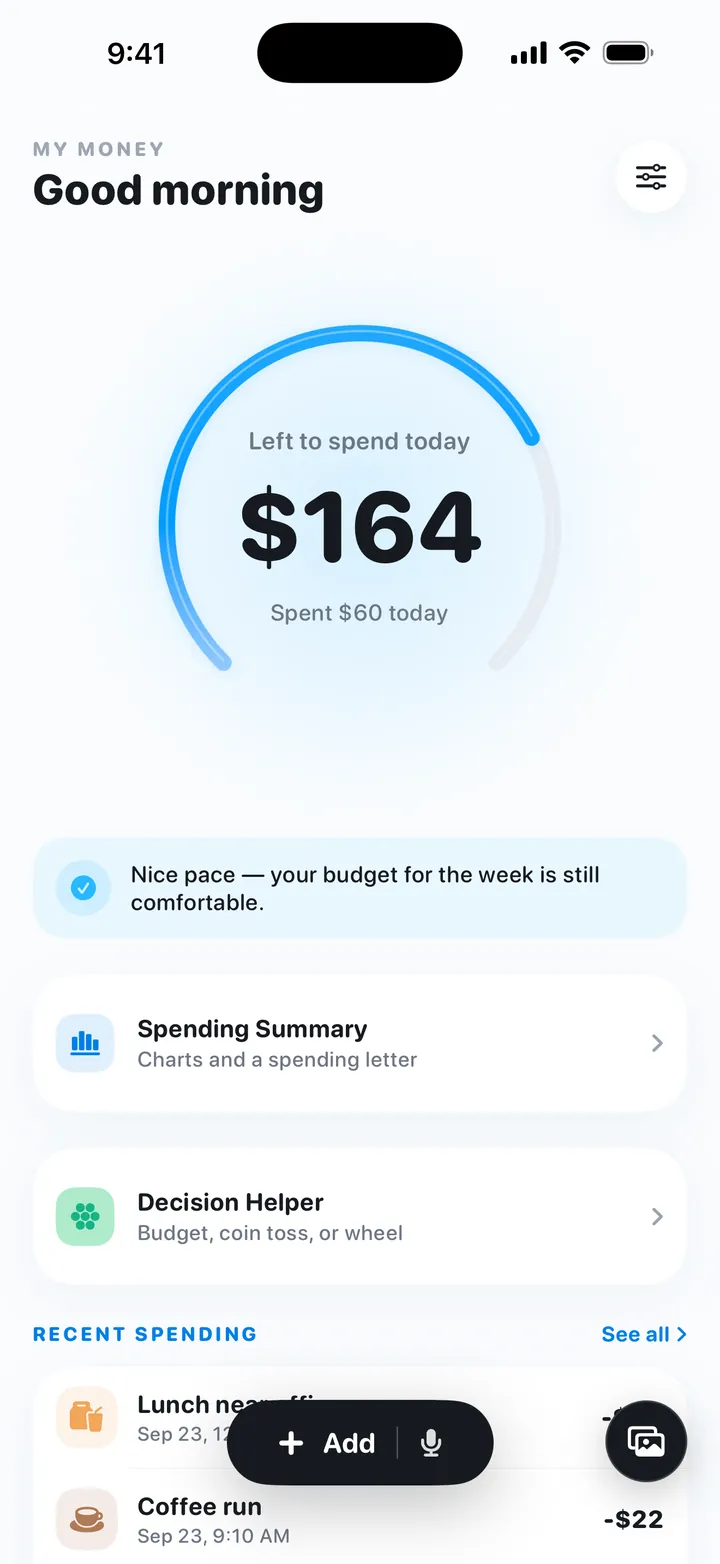
My Money is a free iPhone app that turns a monthly budget into one number: how much you can still spend today. It has no special challenge mode; the daily budget does the work, which suits the gentler version.
- One number on Home. The Home screen shows what is left to spend today, what you have spent today, a one-line status and your recent entries.
- Carry-over with a cap. Spend less than the daily amount and the difference carries into the following days; spend more and the coming days get less. Carry-over is capped at 5 days' worth of the daily amount, so a quiet week does not turn into one oversized number.
- A calendar of the challenge. The calendar view shows a total for each day, so you can see which days had spending and how much.
- Quick logging for essentials. Type "Groceries 18" and the amount and category are filled in, or tap the mic and say it; speech recognition runs on the device.
- Recaps and reminders. Daily, weekly and monthly recaps compare your spending with the budget. Evening reminders can be gentle, clear, or only when you are over budget. It is a good moment to log anything you missed.
- A pause before an impulse buy. The decision coin lets you enter what you are tempted by and its price to see the budget impact, then toss a coin. It is meant for fun, but seeing the number first can be enough to decide.
Limits worth knowing: the app cannot tell a no-spend day from a day you forgot to log, so log every purchase, essentials included. My Money is iPhone only (iOS 17 or later) and does not connect to your bank or card. There is no account and no ads, and records are stored on your iPhone.
Try My Money on iPhone
Your monthly budget as one number: what you can still spend today. Log by typing, voice or a bill screenshot. Free, no account, no ads.
FAQ
What are the rules of a no-spend challenge?
You pick a period and buy nothing except the essentials you listed before starting. Bills, groceries from a list, commuting and medicine are usually allowed; takeout, shopping, entertainment and new subscriptions are not. Gifts and planned events are decided in advance.
What counts as essential during a no-spend month?
Anything you would have to pay anyway: rent, utilities, phone, insurance, loan payments, groceries for planned meals, transport to work or school, medicine, and care for children or pets. Write the list down before day one so you are not deciding while tempted.
What if I break my no-spend challenge?
Log the purchase, note why it happened, and carry on the next day. One slip does not reset the challenge. If the same thing keeps happening, either add it to the essentials list on purpose or remove the trigger.
Should I start with a no-spend week or a no-spend month?
A weekend or a week is a good first try because it is easy to plan around. A month shows more of your habits but needs more preparation for bills, birthdays and events that fall inside it.
Does My Money have a no-spend challenge mode?
No, there is no dedicated challenge mode. The daily budget does the job: money you do not spend carries into the following days, up to five days' worth, and the calendar view shows a total for each day.
Try My Money on iPhone
Your monthly budget as one number: what you can still spend today. Log by typing, voice or a bill screenshot. Free, no account, no ads.
Keep reading
 How to stop overspending on food delivery without giving it upSpending too much on food delivery? Find your real number, set a weekly food amount inside a daily budget, and keep delivery for set days. With an example.
 The daily budget method: turn your monthly budget into one number for todayTurn a monthly budget into a daily spending limit: take-home pay minus bills and savings, divided by days. Carry-over rules and a worked example.Daily budget calculatorFree daily budget calculator. Enter take-home pay, fixed costs and savings to see how much you can spend each month and each day, plus tomorrow after carry-over.